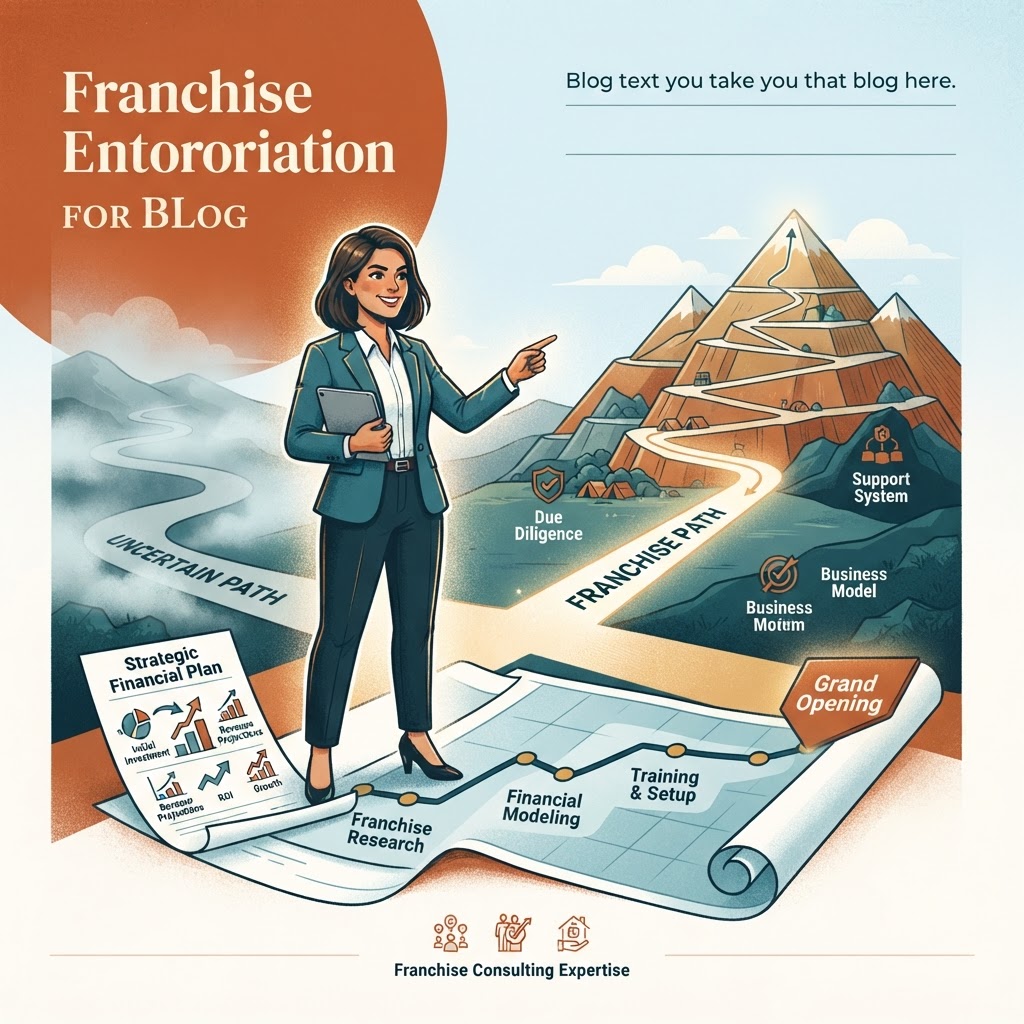
Buying a franchise is one of the biggest financial decisions most people will ever make, and it's normal for that to feel intimidating. But the fear itself usually isn't really about the business — it's about the unknowns. Will it work? Will I be good at this? What happens if it's slower than expected? Most of that fear is manageable, and often it's not even really about whether the concept is sound. It's about whether you've actually planned for what happens between opening day and the day the business can support itself and you.
That gap — the space between "I signed the agreement" and "this business pays my bills" — is where most of the real risk lives. And it's also the part of the process first-time buyers plan for the least, because it's not a number a franchisor hands you upfront the way the franchise fee and buildout costs are. You have to build it yourself.
The Number Everyone Budgets For (And the One They Don't)
When someone starts evaluating a franchise, the first numbers they focus on are the obvious ones: the franchise fee, the cost of the buildout or equipment, initial inventory, maybe some working capital the franchisor recommends. Those numbers are printed right in the Franchise Disclosure Document, so they're easy to find and easy to plan around. Most buyers get this part right, or close to it.
What's much harder to see coming — because no one hands you a document with it printed on it — is how long it will actually take for the business to generate enough revenue to cover its own costs, and how much money you personally need to have set aside to bridge that gap. This is where a technically well-financed buyer can still end up in serious trouble, not because they picked a bad franchise, but because they only planned for the cost of starting the business, not the cost of surviving it.
This is the difference between startup capital and working capital, and understanding it is the single most important financial distinction a first-time franchise buyer can learn before they sign anything.
Startup Capital vs. Working Capital vs. Living Expenses
It is helpful to think about franchise financing in three separate buckets, as they behave differently and are depleted at different points in the process.
Startup capital is the money required to open the doors: the franchise fee, buildout, equipment, signage, initial inventory, and any deposits or licensing costs. This is a one-time cost, and it's the number most people (correctly) focus on first.
Working capital is the money the business needs to keep operating while it's still building revenue — rent, utilities, insurance, payroll, marketing, supplier payments, loan servicing. In a mature, profitable business, revenue covers these costs. In a brand-new location, revenue usually doesn't cover them fully for a while, sometimes a long while, which means working capital has to come from somewhere else in the meantime: your reserves.
Personal living expenses are the costs of your life outside the business — your mortgage or rent, groceries, insurance, car payments, your kids' expenses, everything that doesn't stop just because you're now a business owner instead of a salaried employee. This is the bucket that gets forgotten most often, because it feels separate from "the business" on paper, even though it's very much part of what determines whether you can survive the ramp-up period.
A lot of franchise failures don't happen because the business itself was unsound. They happen because the owner ran the numbers on the business and forgot to run the numbers on their own life at the same time. You can have a perfectly capitalized business and still be forced to sell, close, or make destructive short-term decisions because your personal finances couldn't survive the runway the business needed.
Why This Gap Catches Smart People Off Guard
It's worth being honest about who this actually happens to, because it's rarely someone who didn't do their homework. It's usually someone who did plenty of research on the brand, the market, and the unit economics — and simply never built a real month-by-month cash flow model that combined the business's ramp-up with their own household budget.
There's also a structural reason this is easy to miss: the financial projections franchisors provide, particularly the Item 19 figures in the FDD, typically reflect the performance of existing, established locations — not the reality of a brand-new unit with no local brand awareness and no repeat customer base yet. If you build your expectations around what a five-year-old location is earning, you'll systematically underestimate how long your own ramp-up will take, and underestimate how much working capital and personal runway you actually need.
People coming from steady corporate salaries are especially vulnerable to this, for a simple reason: they've never had to build a personal budget around income that doesn't arrive predictably. A regular paycheck creates habits — spending patterns, savings assumptions, timelines — that don't map cleanly onto business ownership, where income can be irregular, delayed, or simply smaller than expected for the first year or two.
Building a Real Plan: What to Actually Calculate
The fix isn't complicated, but it does require sitting down and doing math most buyers skip. Three things need to happen before you sign anything.
First, build a monthly cash flow projection for the business, not just an annual estimate. Annual averages hide the danger. A business that's profitable "on average" over its first year might still run a deep cash deficit in months two through seven before turning positive in month eight. It's the low point of that curve that matters, not the annual average — because that low point is what determines how much working capital you actually need in reserve.
Second, build a separate personal budget covering your actual household expenses, and be honest about it — not a bare-bones "if we cut everything" budget, but what your household realistically spends in a normal month. Then calculate how many months of that budget you can cover from savings, without touching whatever capital is earmarked for the business.
Third, add those two numbers together against a realistic timeline, not an optimistic one. If the franchisor's average time to profitability is twelve months, plan your personal and working capital runway for closer to eighteen. This isn't pessimism — it's just accounting for the fact that averages include locations that had smoother-than-normal openings, and you don't yet know which kind of opening you'll have.
A useful exercise here is to talk to franchisees who are one to three years into ownership — not the top performers the franchisor will proudly introduce you to, but recent owners in general — and ask them directly how long it actually took before the business could support their draw, and whether they had to dip into personal savings longer than they expected. Their answers are almost always more useful than the projections in the FDD, because they're describing what actually happened, not what's structurally possible.
What "Enough" Actually Looks Like
There's no single dollar figure that applies across every franchise concept, but the shape of a solid plan looks roughly the same regardless of industry: enough capital to cover the full startup cost, plus enough working capital to keep the business running through a realistic (not optimistic) ramp-up period, plus enough personal reserve to cover your household expenses for that same window, without relying on the business to start supporting you before it's actually ready to.
If any one of those three pieces is missing or underestimated, the other two don't matter as much as they should — because the moment the money runs out, the business stops being about strategy and starts being about survival, and survival decisions are rarely the ones that build a healthy, long-term business.
The Real Antidote to Fear
Buying a business is scary when it feels like a leap of faith — when the plan stops at "sign the agreement and hope it works out." It's a lot less scary when you can actually see the whole picture: what it costs to open, what it costs to operate before it's self-sufficient, and what it costs to live while that happens. That's not a guarantee of success, but it is the difference between a calculated risk and a blind one.
The buyers who go into franchise ownership with genuine confidence aren't the ones who convinced themselves it will definitely work. They're the ones who did the math on what happens if it takes longer than expected, and know they can absorb that without it becoming a crisis. That kind of preparation doesn't eliminate the risk of business ownership — nothing does — but it's what turns a scary decision into a plan you can actually stand behind.